When an air conditioner stops cooling, some causes are simple to check yourself. This checklist covers safe steps from ENERGY STAR, the U.S. Environmental Protection Agency (EPA) and the U.S. Department of Energy (DOE). It also uses manufacturer guidance, which we label as such. Several steps come from a Carrier owner's manual (edition 03/26) and an American Standard blog post. Both are manufacturer guidance. The Carrier manual covers one of Carrier's product lines. The guide ends with the refrigerant and electrical work that only a technician should do.
| Check | What to look for | Source |
|---|---|---|
| Thermostat | Mode on Cool or Auto; setting lower than the room temperature | Carrier owner's manual (manufacturer guidance) |
| Air filter | Inspect, clean or change once a month | ENERGY STAR |
| Breakers and disconnects | Indoor and outdoor disconnect switches; main panel breakers or fuses | Carrier owner's manual (manufacturer guidance) |
| Outdoor unit | Unrestricted airflow; no debris on the sides or top | Carrier owner's manual (manufacturer guidance) |
| Frozen indoor coil | System off at the thermostat, fan set to ON | American Standard blog (manufacturer guidance) |
| Condensate drain | Water trickles from the drain after a few minutes of cooling | Carrier owner's manual (manufacturer guidance) |
Check the thermostat settings
The Carrier owner's manual is manufacturer guidance. It covers one variable-speed product line. It says that for cooling, your temperature setting should be LOWER than the room temperature shown on the display. It says the System/Mode control should be on Cool or Auto.
The same manual notes that a system may not start right away: "There may be delays in unit operation that are built-in to protect the equipment and your comfort."
Check the air filter
ENERGY STAR's maintenance checklist lists one task for homeowners to do themselves. It says, "Inspect, clean, or change air filters once a month in your central air conditioner, furnace, and/or heat pump." It says a dirty filter "can increase energy costs and damage your equipment, leading to early failure." DOE's 2022 Energy Saver Guide says to "clean or replace filters on air conditioners once a month or as recommended."
The Carrier manual also says to check for enough airflow. It says filters "should be reasonably clean and interior vents should be open and unobstructed." Our guide to MERV ratings explains filter ratings.
Check breakers and disconnect switches
The Carrier manual says to check the indoor and outdoor disconnect switches. It also says to check the breakers or fuses in your main electrical panel.
Looking at a breaker is different from working on the unit. The same manual warns of electrical shock. It says to make sure the main electrical disconnect switch is OFF before installing, modifying or servicing the system. It adds that there may be more than 1 disconnect switch. ENERGY STAR lists electrical connections as part of a contractor's check-up. It says "faulty electrical connections can cause unsafe operation of your system and reduce the life of major components."
Check the outdoor unit
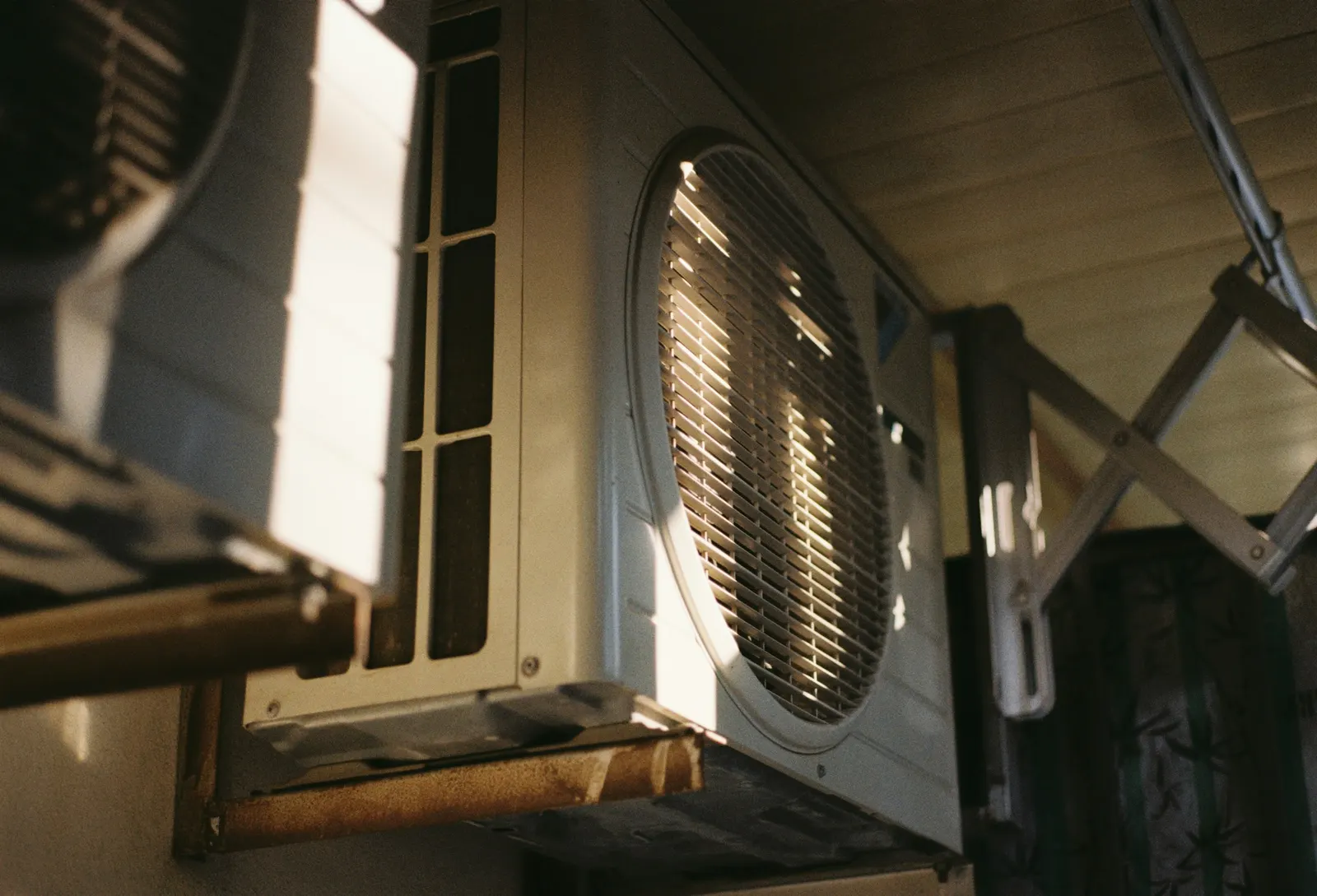
The Carrier manual says the outdoor unit "needs unrestricted airflow." It adds, "Do not cover it or place items on or next to it." It says not to let grass clippings, leaves or other debris build up on the sides or top of the unit. For its own product line, Carrier calls for at least 12 inches of clearance between the outdoor unit and tall grass, vines and shrubs. Your own manual may give a different figure.
The manual says the consumer may do the monthly maintenance items and rinse the outdoor unit. It says "all other maintenance items and all service work must be performed by a qualified service technician."
If the indoor coil is frozen
We found no EPA, DOE or ENERGY STAR page with steps for a frozen evaporator coil. American Standard, a manufacturer, covers it in a June 30, 2026 blog post. It says that if the coil is frozen, "turn off the system at the thermostat but leave the fan set to ON to help the coil thaw out." It warns that "running the AC unit or heat pump with a frozen coil can do major damage to the system." It also says not to chip away at the ice.
The blog says "the most common cause for a frozen evaporator coil is improper airflow." The blog lists other causes too. They include a dirty or clogged filter, a dirty evaporator coil, blocked return vents, a faulty thermostat and a refrigerant leak. It notes that "the coil must thaw before the HVAC technician can assess the situation."
Check the condensate drain
The Carrier manual also covers the drain. It says, "After a few minutes of operation, water should trickle from the condensate drain of the indoor coil. Check this occasionally to be sure the drain system is not clogged."
EPA's mold and moisture guide says to "keep air conditioning drip pans clean and the drain lines unobstructed and flowing properly." ENERGY STAR lists the condensate drain as part of a contractor check-up. It says "a plugged drain can cause water damage in the house and affect indoor humidity levels."
Refrigerant and electrical work only a technician should do
EPA's homeowner FAQ says you need Section 608 certification to recharge appliances. It says refrigerant for stationary appliances is only sold to certified technicians or the companies that employ them. EPA's definition of a technician includes anyone who attaches and detaches hoses and gauges to measure pressure in an appliance. It also includes anyone who adds or removes refrigerant.
EPA rules under Section 608 of the Clean Air Act also ban people from venting refrigerants on purpose. The ban applies while they maintain, service, repair or dispose of air-conditioning equipment. If your system leaks, EPA says to ask your service technicians to find and fix the leak instead of "topping it off." ENERGY STAR says a contractor should check the refrigerant level. It says "too much or too little refrigerant will make your system less efficient."
EPA warns about one product sold as a replacement refrigerant. It says R-22a "is highly flammable and not an acceptable alternative for your residential AC system." EPA says the refrigerant your system uses is "typically listed on the unit's nameplate." For central air conditioners, the nameplate "is usually on the outdoor condenser."
When to call an HVAC professional
EPA says: "If your HVAC equipment is more than 10 years old or not keeping your house comfortable, EPA recommends that you have it evaluated by a professional HVAC contractor." The sources above also point to a technician for any refrigerant leak or recharge and for electrical faults. They also point to a technician for a coil that froze, once it has thawed.
ENERGY STAR advice and central air conditioners
EPA's homeowner FAQ and DOE's 2022 Energy Saver Guide still point readers toward ENERGY STAR equipment. But ENERGY STAR ended its central AC specification in February 2026. Its sunset page gives February 1, 2026. Its Version 6 specification page gives February 2, 2026. That advice no longer applies to central air conditioners. Our central air guide explains the federal minimums that still apply.