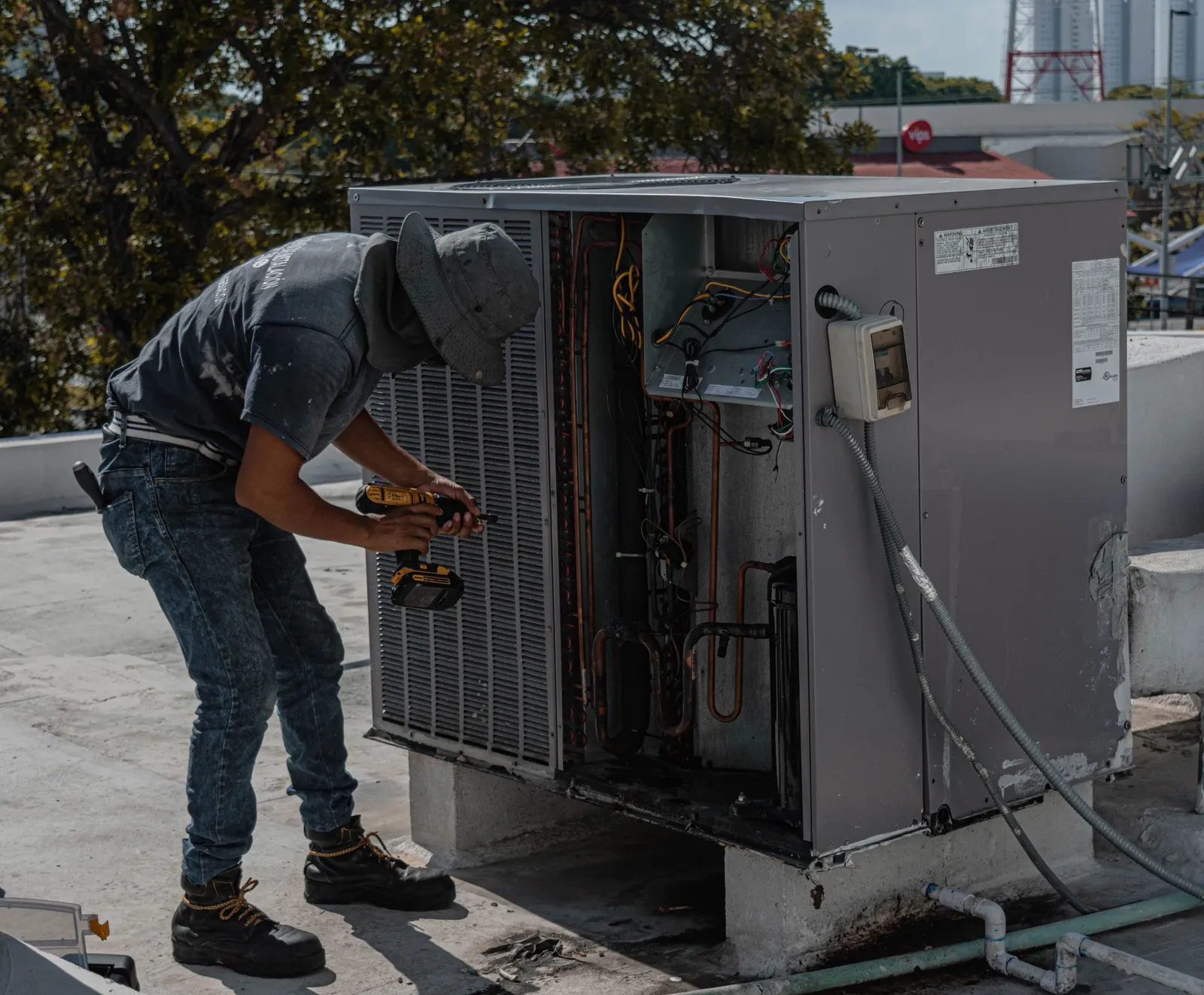
The Bureau of Labor Statistics (BLS) puts out job projections for HVAC technicians. They appear in its Occupational Outlook Handbook (OOH). BLS calls the job heating, air conditioning, and refrigeration mechanics and installers. The job code is 49-9021. BLS says these workers are "often called HVAC technicians." The handbook page we used was last modified August 27, 2026. Its projections cover 2025–35.
Projected job growth, 2025–35
BLS projects that employment of these workers will grow 11 percent from 2025 to 2035. It calls this "much faster than the average for all occupations." The handbook puts average growth for all occupations at 3 percent. Its projections table shows these figures:
| Measure | Value |
|---|---|
| Employment, 2025 | 440,900 |
| Projected employment, 2035 | 489,100 |
| Percent change, 2025–35 | 11% |
| Numeric change, 2025–35 | 48,200 |
Source: BLS handbook projections for job code 49-9021, page last modified August 27, 2026.
Projected percent change in employment, 2025–35
- HVAC mechanics and installers11%
- Installation, maintenance, and repair occupations5%
- Total, all occupations3%
The handbook's 2025 job count includes self-employed workers, who held 6% of those jobs. Our HVAC technician pay guide uses BLS wage survey data, which leave out the self-employed. So the job count in that guide measures something different.
Where job openings come from
The handbook projects about 40,600 openings each year, on average, over the decade. It expects many of those openings to come from the need to replace workers. These are workers who move to different occupations or leave the labor force, such as to retire.
BLS expects commercial construction, including data centers, and home building to drive job growth. It also expects more demand for HVAC technicians as the number of advanced climate-control systems grows.
BLS uses "HVACR" as short for heating, ventilation, air conditioning, and refrigeration systems. It says repairing and replacing these systems is a large part of these technicians' work. It adds that HVAC technicians will be needed to retrofit, upgrade or replace existing climate control systems.
Where HVAC technicians work
BLS says HVAC mechanics and installers "held about 440,900 jobs in 2025." It lists some of their largest employers:
| Employer | Share of jobs, 2025 |
|---|---|
| Plumbing, heating, and air-conditioning contractors | 68% |
| Self-employed workers | 6% |
| Wholesale trade | 3% |
| Educational services; state, local, and private | 3% |
| Retail trade | 3% |
Source: BLS handbook, page last modified August 27, 2026.
BLS says some technicians specialize in one or more areas of HVACR. Its examples are radiant heating systems, testing and balancing, and commercial refrigeration in places such as grocery stores, hotels and restaurants. It adds that some technicians focus on installing HVACR systems, while others mainly repair and maintain them.
What HVAC technicians do
BLS says these workers work on HVACR systems that control the temperature and air quality in buildings. The handbook says HVAC technicians usually do these tasks:
- Install, maintain, and repair HVACR systems.
- Install electrical components and wiring.
- Inspect and test HVACR systems and components.
- Discuss system malfunctions with customers.
- Repair or replace worn or defective parts.
- Recommend maintenance to improve system performance.
- Keep records of work performed.
BLS says technicians who install or repair air conditioning and refrigeration systems must follow rules on saving, recovering and recycling refrigerants. BLS also says HVAC technicians have one of the highest rates of injuries and illnesses of all occupations. Potential hazards it lists include burns from electrical parts or chemicals. They also include muscle strains or sprains from handling heavy equipment or machinery.
Training, certification and licensing
The handbook lists a postsecondary nondegree award as the typical entry-level education. It also lists long-term on-the-job training. It lists no work experience in a related occupation. BLS says HVAC technicians typically need postsecondary instruction. It says this comes from technical and trade schools or community colleges with programs in heating, air conditioning, and refrigeration. BLS says these programs generally last from 6 months to 2 years and lead to a certificate or an associate's degree.
BLS also says some technicians train through an apprenticeship program, which usually lasts several years. It adds that apprenticeships include paid on-the-job training and some technical instruction each year.
BLS says the U.S. Environmental Protection Agency (EPA) requires nearly all HVAC technicians to be certified in proper refrigerant handling. It adds that some states and localities require HVAC technicians to be licensed. Our guide to EPA Section 608 certification and the A2L refrigerant transition has more. We also cover HVAC licensing in Arizona, Washington, Texas, Florida and Ohio.
State job projections
The handbook says each state has job projections. It says Labor Market Information (LMI) or individual state Employment Projections offices develop them. It says all state projections data are available at Projections Central. We did not pull projections for Arizona, Washington, Texas, Florida or Ohio. We did not find projected openings by state in the handbook.
For homeowners, our guide to checking an HVAC contractor's license covers license lookups in the same states.