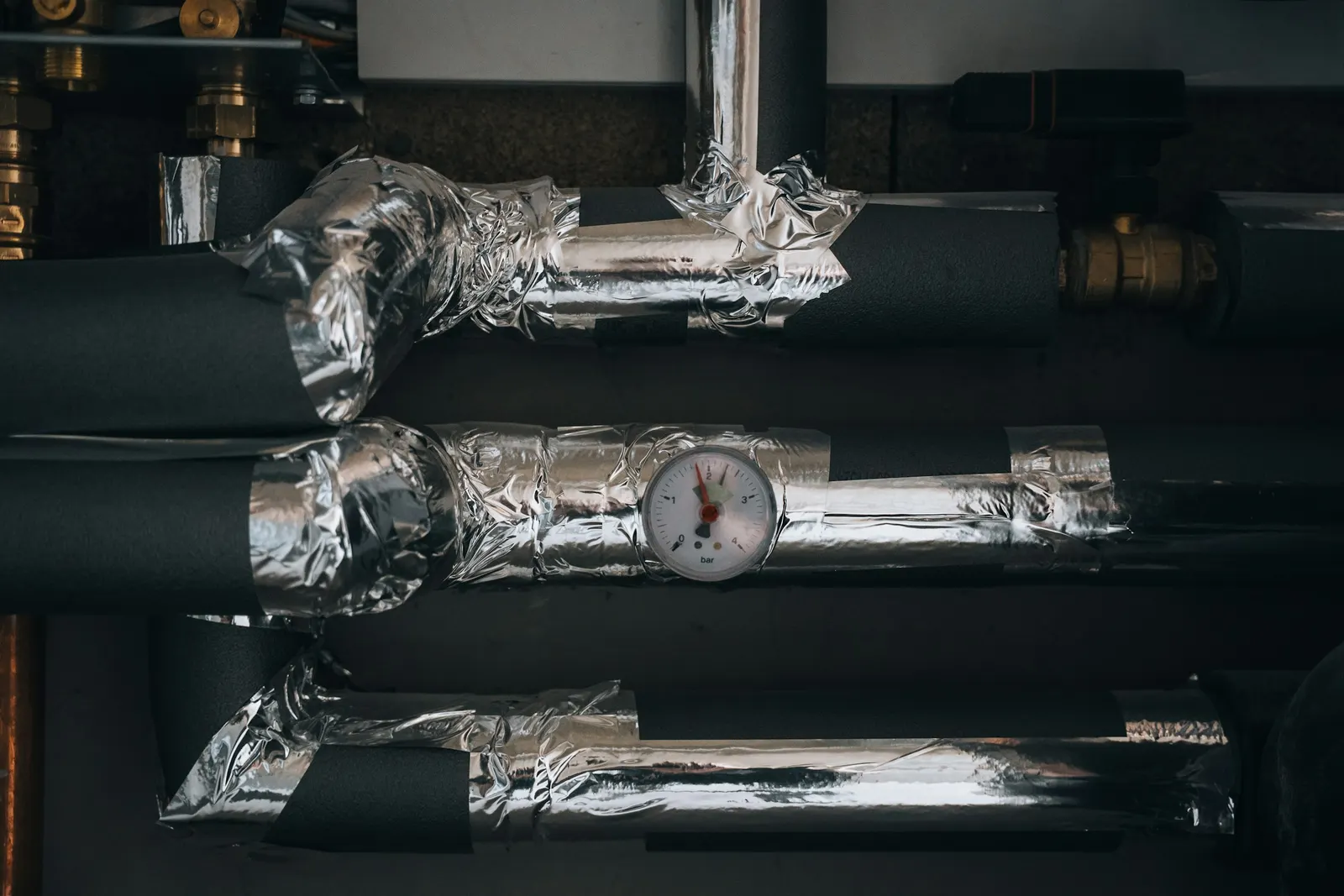
A boiler heats a home with hot water or steam instead of heated air. This guide explains how boilers work and what federal rules require. Those rules cover efficiency and design for boilers made on or after January 15, 2021. We explain what happened to the last proposal by the U.S. Department of Energy (DOE) to change them. We also cover ENERGY STAR's boiler criteria, carbon monoxide safety and maintenance.
How a boiler heats a home
DOE's 2022 Energy Saver Guide explains the basics. It says boilers use natural gas, oil, electricity or propane to heat water for steam or hot water. Pipes carry that water to upright radiators, baseboard convectors or radiant floor tubing. The guide adds, "Combination units can provide space and water heating."
DOE's Building America Solution Center (BASC) gives more detail in a 2021 guide. Pacific Northwest National Laboratory publishes BASC for DOE. The guide says the hot water can go through plastic pipe loops in the floor for radiant floor heat. It can also go through metal radiators mounted along the wall or baseboard radiators mounted near the floor. The guide says most combustion boilers are fueled by natural gas. Where natural gas is not readily available, fuel oil, propane and wood are other fuel sources.
Federal rules define a low pressure steam or hot water boiler. The definition sets pressure and temperature limits. It says a low pressure steam boiler operates at or below 15 pounds psig steam pressure. A hot water boiler operates at or below 160 psig water pressure and 250 °F water temperature.
Federal boiler efficiency and design standards
AFUE stands for annual fuel utilization efficiency. Federal rules set a minimum AFUE for home boilers in 10 CFR 430.32. The rule covers home boilers made on and after January 15, 2021. Their AFUE must not be less than the levels it lists, and they must meet its design rules. The table below shows every product class in the eCFR, which is current as of October 1, 2026.
| Boiler type | Minimum AFUE | Design requirements |
|---|---|---|
| Gas-fired hot water | 84% | No constant-burning pilot allowed. Must have an automatic means to adjust water temperature (except boilers with tankless domestic water heating coils). |
| Gas-fired steam | 82% | No constant-burning pilot allowed. |
| Oil-fired hot water | 86% | Must have an automatic means to adjust temperature (except boilers with tankless domestic water heating coils). |
| Oil-fired steam | 85% | None |
| Electric hot water | None | Must have an automatic means to adjust temperature (except boilers with tankless domestic water heating coils). |
| Electric steam | None | None |
The rule explains what the automatic control must do. It must automatically adjust the temperature of the water the boiler supplies. Each incremental change in inferred heat load must bring a matching incremental change in that water temperature. When there is no inferred heat load, the control must keep the water in the boiler at no more than 140 degrees Fahrenheit.
One exception applies. It covers a boiler built to run without any need for electricity or for any electric connection, gauges, pumps, wires or devices. This kind of boiler does not have to meet the AFUE or design rules above. It must meet paragraph (e)(2)(i) of the same section instead.
Boiler AFUE: federal minimums and ENERGY STAR Version 3.0
- Federal minimum, gas-fired steam82%
- Federal minimum, gas-fired hot water84%
- Federal minimum, oil-fired steam85%
- Federal minimum, oil-fired hot water86%
- ENERGY STAR, oil87%
- ENERGY STAR, gas90%
DOE's 2023 boiler proposal was withdrawn
DOE proposed new consumer boiler standards in 2023. It did not finish that rule. Its withdrawal notice says the proposed rule was published in the Federal Register on August 14, 2023, at 88 FR 55128. The notice says that rule "is withdrawn on January 17, 2025."
We searched DOE's Federal Register documents from January 20, 2025 on. As of October 2026, we found no new proposal or final rule on consumer boiler standards. The eCFR, current as of October 1, 2026, still lists the January 15, 2021 standards.
ENERGY STAR boiler criteria (Version 3.0)
ENERGY STAR's boiler specification is Version 3.0. It was revised in January 2024. Gas boilers need an AFUE of at least 90%, and oil boilers need at least 87%. The specification says boilers meant only for commercial use are not eligible for ENERGY STAR. It says boilers with an input rating of 300,000 Btu per hour or higher are not eligible either.
ENERGY STAR's boiler page says certified gas boilers are about 6% more efficient than the federal standard. It says certified oil boilers are about 1% more efficient. It lists features that help them reach those levels, including:
- Electronic ignition, so the pilot light does not need to burn all the time
- New combustion technologies that get more heat from the same amount of fuel
- Sealed combustion that uses outside air to fuel the burner, which reduces drafts and improves safety
ENERGY STAR's replacement page lists a furnace or boiler more than 15 years old as one reason to consider replacing it. You can treat that age as a prompt to weigh options, but it is not a lifespan. Our research did not include a federal figure for how long a boiler lasts.
Boilers and carbon monoxide safety
The U.S. Environmental Protection Agency (EPA) warns about carbon monoxide (CO) on its carbon monoxide page. It says CO is a toxic gas with no odor or color. Because you cannot see, taste or smell it, EPA says "CO can kill you before you are aware it is in your home."
EPA's page also passes along advice from the U.S. Consumer Product Safety Commission (CPSC). It says CPSC recommends that every home have CO alarms on each level outside each sleeping area. CPSC also urges a yearly professional inspection of all fuel-burning appliances to find CO leaks. A 2017 BASC guide says any home with a combustion appliance or an attached garage should have a CO alarm. It says the alarm should be in a central location very close to each separate sleeping area of the home.
Boiler maintenance
EPA advises having a trained professional inspect, clean and tune up your central heating system every year. Its examples are furnaces, flues and chimneys, and the list does not name boilers. ENERGY STAR's maintenance checklist has a general heating check rather than one just for boilers. It says to "Check all gas (or oil) connections, gas pressure, burner combustion and heat exchanger." It warns that faulty gas or oil connections "are a fire hazard and can contribute to health problems."
A 2017 BASC guide to oil-fired boilers says proper inspection and maintenance of the equipment can bring significant gains in performance. It says this is especially true in steam and hot water heating systems.
The 2021 BASC gas boiler guide gives installers advice on controls and sizing. For condensing boilers, it says to install an outdoor reset control to match system output to actual load. For those boilers, it also says to recommend that homeowners do not use a night-time temperature setback strategy. The guide warns that oversized equipment can "short cycle," or turn on and off again and again before the demand is met. BASC says that "can have negative impacts on energy use, comfort, and equipment durability."
How many U.S. homes use boilers
This guide does not give a current share of U.S. homes heated by boilers. The only figure in our research comes from the 2021 BASC gas boiler guide. The guide cites 2009 data from the U.S. Energy Information Administration (EIA). It says up to 11% of existing households use some form of hot water or steam heat. That figure is more than 15 years old, so do not read it as current. We did not check EIA's newer household survey data.
If you are thinking about replacing an oil boiler, see our guide to switching from oil heat to a heat pump. Our furnace guide and our comparison of heat pumps and furnaces cover forced-air options.