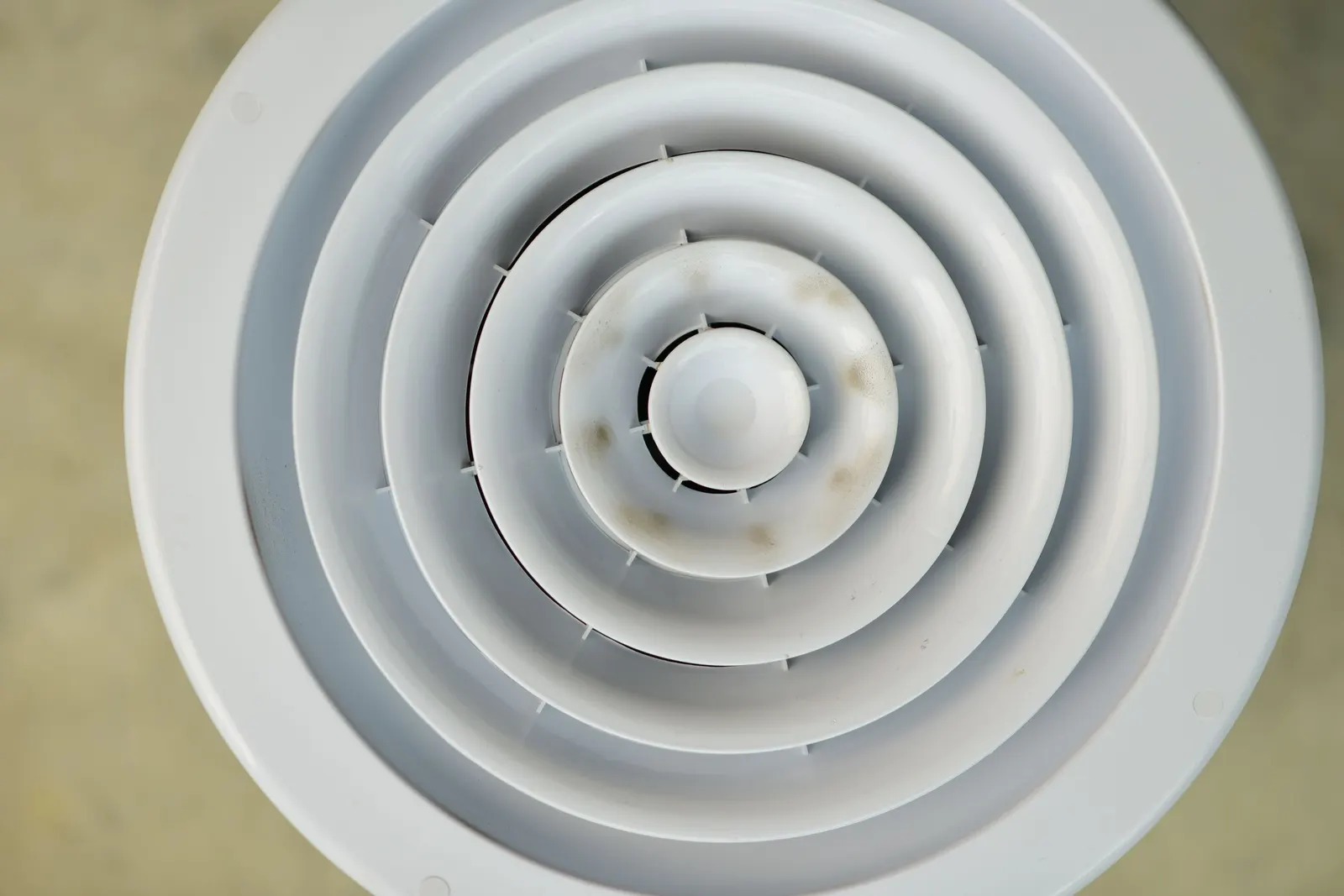
A central air conditioner cools your home by moving heat from indoors to outdoors. This guide explains how a split system works and what federal SEER2 minimums new equipment must meet. It shows how a system should be sized and what ENERGY STAR says about installation and maintenance. It also covers a recent change by the U.S. Environmental Protection Agency (EPA). On February 1, 2026, EPA ended the ENERGY STAR specification for central ACs.
How a split-system central air conditioner works
The newest Department of Energy (DOE) guide to home cooling that we found is from 2016. It says air conditioners work much like a refrigerator. They "transfer heat from a home's interior to the warm outside environment."
The guide describes two layouts. Many systems are called split systems because they have two units. The outdoor unit holds the condenser and compressor, and the indoor unit is often connected to a furnace or heat pump. A packaged system has the evaporator, condenser and compressor in one unit.
| System type | What DOE's 2016 guide says it includes |
|---|---|
| Split system | An outdoor unit with the condenser and compressor, plus an indoor unit that is often connected to a furnace or heat pump |
| Packaged system | The evaporator, condenser and compressor in one unit |
A label on the guide's diagram calls the compressor "a pump that moves refrigerant between the evaporator and the condenser to chill the indoor air."
Federal SEER2 minimums for central air conditioners
SEER2 stands for Seasonal Energy Efficiency Ratio 2. Under 10 CFR 430.32, central ACs and heat pumps "manufactured on or after January 1, 2023" must meet SEER2 minimums.
The national minimum is 13.4 SEER2 for a split AC with a certified cooling capacity under 45,000 Btu/hr. The federal rule sets a higher level of 14.3 SEER2 for the same size of split AC in the Southeast and Southwest. That level applies to units installed there on or after January 1, 2023. The Southwest also has an EER2 minimum of 11.7 or 9.8, depending on the unit's SEER2 rating.
Federal minimum SEER2 for split central ACs under 45,000 Btu/hr
- National minimum13.4 SEER2
- Southeast14.3 SEER2
- Southwest (EER2 minimum also applies)14.3 SEER2
Our guide to SEER2 ratings lists the states in each region. It also explains the Southwest EER2 rule and shows how to read the EnergyGuide label.
The ENERGY STAR specification for central air conditioners ended in 2026
On February 1, 2026, EPA ended the ENERGY STAR specification for central ACs. We found no ENERGY STAR criteria for central air conditioners in effect after that date. A product listing or quote may give an ENERGY STAR level for a central AC. If it does, check which specification and date it refers to.
How to size a central air conditioner with ACCA Manual J and Manual S
Sizing starts with a load calculation. The Air Conditioning Contractors of America (ACCA) publishes manuals for this work, including Manual J and Manual S.
ACCA says Manual J 8th Edition "is the national ANSI-recognized standard for producing HVAC equipment sizing loads for single-family detached homes, small multi-unit structures, condominiums, townhouses, and manufactured homes." ACCA also says a proper Manual J load calculation "is required by national building codes and most state and local jurisdictions." That statement is ACCA's. We did not review building code text for this article. So we cannot confirm which code applies where you live.
Next comes ACCA's Manual S, which covers choosing the equipment. ACCA calls it "a comprehensive guide for selecting and sizing residential heating, cooling, dehumidification, and humidification equipment." ACCA says it "provides size limits to ensure that properly installed equipment can deliver optimal comfort."
| Step | ACCA manual | What ACCA says it does |
|---|---|---|
| 1. Load calculation | Manual J, 8th Edition (ANSI/ACCA 2 Manual J - 2016) | Produces HVAC equipment sizing loads for homes |
| 2. Equipment selection | Manual S (ANSI/ACCA 3 Manual S - 2023) | Provides size limits for selecting heating and cooling equipment |
ENERGY STAR also warns homeowners about systems that are too big. Its HVAC quality installation page says "oversized equipment may cycle too frequently, resulting in less comfort and a shortened lifespan." It tells you to make sure the contractor uses the real features of your home. The contractor should not just rely on a "rule of thumb."
ENERGY STAR's tips for hiring a contractor add that "a bigger system isn't always better." They say a contractor should size the system by your house size, insulation level and windows.
Why installation quality and refrigerant charge affect efficiency
ENERGY STAR's Heat & Cool Efficiently page says that "improper installation can reduce system efficiency by up to 30 percent." It adds that this costs you more on your utility bills while "possibly shortening the equipment's life."
The refrigerant charge is one part of a quality install. ENERGY STAR's quality installation page says "properly charging an air conditioner or heat pump helps reduce energy consumption and decreases the risk of system failure."
Central air conditioner maintenance
ENERGY STAR's maintenance checklist says to have a contractor check your system each year before the season starts. It says spring is the best time to check the cooling system, because contractors get busy once summer and winter come.
The checklist items for central air include these three:
- Coils. Clean the evaporator and condenser coils. ENERGY STAR says dirty coils make it harder for the system to cool your home and make it run longer. This raises energy costs and shortens the life of the equipment.
- Refrigerant level. Check the level and adjust it if needed. Too much or too little refrigerant makes the system less efficient. This raises energy costs and shortens the life of the equipment.
- Airflow. Clean and adjust blower components. ENERGY STAR says airflow problems can reduce your system's efficiency by up to 15 percent.
To learn how long central ACs last in the Phoenix area, see our guide to how long an AC lasts in Arizona.
Refrigerant rules for new central air conditioners
EPA's table of HFC restrictions by sector was last updated August 28, 2026. It lists a GWP limit of 700 for residential and light commercial air conditioning and heat pump systems. The installation compliance date is January 1, 2025. A footnote to that row covers systems whose specified components were all made or imported before January 1, 2025. For those systems, it lists no installation compliance date. Another footnote says components used to repair existing systems are not subject to these restrictions. EPA also has a list of substitutes for these systems, last updated March 19, 2026. It lists R-454B as "Acceptable with Use Conditions." Our guide to the R-410A phase-out covers these refrigerant rules in more detail.