This guide is for HVAC company owners who saw website traffic or calls change in 2026 and want to know whether a Google update was the cause. It covers what Google has published about its 2026 ranking updates. We found no Google data on how any 2026 update affected HVAC companies or other local service businesses. We also left out agency claims about the updates that Google has not confirmed.
Which Google updates in 2026 were core updates?
Google lists two core updates for 2026, one in March and one in May. The list comes from Google's Search Status Dashboard, which records Google's ranking updates. It shows seven ranking updates in 2026. The other five are four spam updates and one update to Discover.
| Update name on the dashboard | Type | Start date | Duration listed |
|---|---|---|---|
| February 2026 Discover update | Discover | February 5, 2026 | 21 days, 17 hours |
| March 2026 spam update | Spam | March 24, 2026 | 19 hours, 30 minutes |
| March 2026 core update | Core | March 27, 2026 | 12 days, 4 hours |
| May 2026 core update | Core | May 21, 2026 | 11 days, 21 hours |
| June 2026 spam update | Spam | June 24, 2026 | 2 days, 1 hour |
| August 2026 spam update | Spam | August 18, 2026 | 2 days, 16 hours |
| September 2026 spam update | Spam | September 24, 2026 | None listed |
From Google's Search Status Dashboard ranking history. Start dates are in US/Pacific time. The September update had no end date posted when we checked.
Google released the March 2026 core update on March 27, 2026. It posted, "The rollout was complete as of April 8, 2026." Google released the May 2026 core update on May 21, 2026, and posted that the rollout "was complete as of June 2, 2026." The dashboard lists no core update for June, July, August or September 2026. The last core update before 2026 was the December 2025 core update. It started December 11, 2025, and the dashboard lists its duration as 18 days, 2 hours.
Was the February 2026 update a core update?
Google called it a Discover core update. Google said it was an update to the systems that surface articles in Discover. Google's incident page calls it the "February 2026 Discover core update." The dashboard list names it the "February 2026 Discover update." Google's blog post on the update says, "This is a broad update to our systems that surface articles in Discover."
The update launched for English-language users in the US. Google said it would improve Discover in a few ways, including showing more locally relevant content from websites based in the user's country and reducing sensational content and clickbait. This guide counts it apart from the March and May core updates because Google tied it to Discover.
What did Google say the 2026 core updates changed?
We found no Google statement on what the March or May 2026 core updates changed. Each incident page says Google released the update and that "The rollout may take up to 2 weeks to complete." We found no Google Search Central blog post about either update.
Google's guide to core updates describes them in general terms. It says, "Several times a year, Google makes significant, broad changes to our search algorithms and systems." It adds, "These changes are broad in nature, and don't target specific sites or individual web pages." We found no Google core-update text that names HVAC, local services or any other industry. Google also says, "In general, most sites don't need to worry about core updates and may not even realize one has happened."
Some marketing agencies have published their own claims about what changed in 2026. We found no Google page that confirms them, so this guide does not repeat them. On page experience, Google's page experience guide says, "There is no single signal." It says Core Web Vitals "are used by our ranking systems." It also says good Core Web Vitals results don't guarantee that your pages will rank at the top. Google adds, "Beyond Core Web Vitals, other page experience aspects don't directly help your website rank higher in search results."
Which 2026 updates were spam updates?
Google's spam updates in 2026 came in March, June, August and September. Google says a spam update is a notable improvement to the automated systems that detect search spam. Its example is SpamBrain, which Google calls "our AI-based spam-prevention system." Google says, "Sites that violate our policies may rank lower in results or not appear in results at all." It says sites that see a change after a spam update should review its spam policies.
Google described the August 2026 spam update as one "which applies globally and to all languages." It used the same words for the September 2026 spam update, which started September 24, 2026. As of October 2026, Google had not posted an end date for the September update. Google said its rollout "may take up to two weeks to complete."
How can I tell if a core update hurt my HVAC website?
Google says to wait until the update has finished, then compare a week after it with a week before it in Search Console. Its core updates guide gives these steps:
- Confirm the update has finished rolling out. Check the Search Status Dashboard and note its start and end dates.
- Wait "at least a full week after a core update completes" before you analyze your site in Search Console.
- Compare a week after the update with a week before the update started rolling out.
The March 2026 core update finished on April 8, 2026. The May 2026 core update finished on June 2, 2026.
Next, look at how far your pages dropped. Google says a small drop, such as from position 2 to 4, needs no drastic action. It recommends "avoiding making changes to content that's already performing well." For a large drop, such as from position 4 to 29, Google says to "Do a deeper assessment." Google also suggests analyzing search types separately, such as Web Search and Google Images.
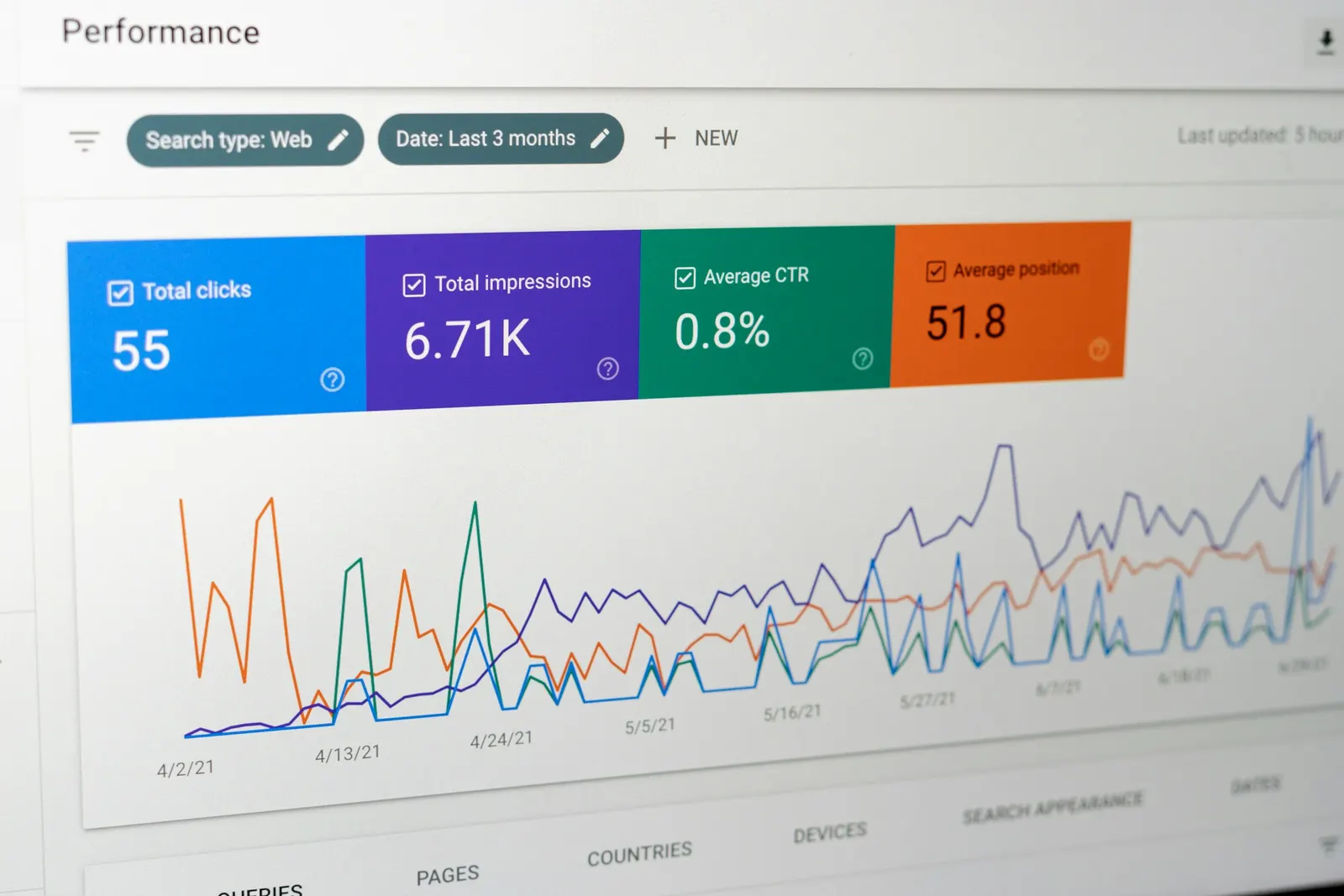
Then rule out a change in demand. Google's guide to traffic drops says demand for some searches changes "due to a new trend, or seasonality throughout the year." It suggests filtering the Search Console Performance report to one query at a time, starting with your top queries. Then you check those queries in Google Trends to see "if the drop was only for your website or throughout the web." Google's page does not mention HVAC, but you can run the same check on your heating and cooling searches. The same page says that if a drop follows an algorithmic update, "there might not be anything fundamentally wrong with your content."
Google's steps use Search Console data. We suggest also checking your own call and booking records for the same weeks before you decide an update cost you work.
What does Google say not to do after a core update?
Google says to avoid quick fixes and to delete content only as a last resort. Its core updates guide warns against "quick fix" changes, "like removing some page element because you heard it was bad for SEO." It says to make changes that make sense for your users and hold up over the long term. It says, "Deleting content is a last resort, and only to be considered if you think the content can't be salvaged."
Google's guide to helpful content says its ranking systems are designed to favor "helpful, reliable information that's created to benefit people." Its self-check questions include warning signs like these:
- Producing lots of content on many different topics in hopes that some of it performs well
- Using extensive automation to produce content on many topics
- Mainly summarizing what others say without adding much value
- Writing to a set word count because you heard Google prefers one, which Google says it does not
Google says results from your changes can take time. Some changes can show in a few days, but "it could take several months for our systems to learn and confirm" that a site has improved. If a few months pass with no effect, Google says that "could mean waiting until the next core update." It also says it makes smaller core updates that it does not announce. Google adds that "there's no guarantee that changes you make to your website will result in noticeable impact in search results."
Are HVAC city pages against Google's spam policies?
Google's spam policies list city pages that funnel visitors to one page as an example of doorway abuse. Google's spam policies say doorway abuse is when sites or pages "are created to rank for specific, similar search queries." Its examples include "Having multiple domain names or pages targeted at specific regions or cities that funnel users to one page." Another example is "Creating substantially similar pages that are closer to search results than a clearly defined, browseable hierarchy."
The same policies cover scaled content abuse. Google says this is "when many pages are generated for the primary purpose of manipulating search rankings and not helping users." Its examples include "Using generative AI tools or other similar tools to generate many pages without adding value for users." Google says this applies "no matter how it's created."
We found no Google statement that the 2026 updates changed how Google treats city or service-area pages. If you run city pages, these spam policies are the Google rules we found that apply to them.
Do core updates affect Google Maps and local results?
We found no Google statement on whether core updates affect Google Maps or local results. Google's core updates guide, its traffic-drop guide and the 2026 dashboard entries do not mention local results.
Google's Business Profile help page on local ranking says, "Local results are mainly based on relevance, distance, and popularity." The same page uses the heading "Prominence" for the third factor. It also says, "There's no way to request or pay for a better local ranking on Google."
Our guide to getting more Google reviews within the rules covers Google's review policies. For paid placement on Google Search and Maps, see our comparison of Google Ads and Local Services Ads. This guide covers ranking updates only. For AI Overviews, AI Mode and ChatGPT, see our guide to how HVAC companies show up in AI search. More guides for HVAC owners are on the Owner's Desk.